Wednesday, January 1, 2025

Ten Best Films of 2024

1. Grand Tour (Miguel Gomes, Portugal / Italy / France / Germany / Japan / China)
Gomes's classically postmodern masterpiece is two films at once: luxuriant non-fiction travelogue and heavily narrated tale of missed connection. The former film critic turned leading light of serious art cinema allows his many contradictions to remain unresolved, creating a new, unashamedly anachronistic, vibe-filled form of period film that relies heavily on the two-part story's overlapping Asian settings. In turns an heir to Apichatpong, Oliveira, and always Godardian in its approach, Gomes's thick, pregnant black-and-white images gesture back equally to an outmoded era of Hollywood exoticism. That I would choose Grand Tour as the year's best was never in doubt.

2. By the Stream (Hong Sang-soo, South Korea)
Even if Hong's breathtaking recent productivity--sixteen features since 2015--is best understood as a single monumental text, his ever-renewable capacity for variation has continued to yield one major new work after another. The autumnal By the Stream, his second feature of 2024 after A Traveler's Needs, may be the most vertical and expansive of his recent films, tracing a theatrical artwork from inspiration and authorship through rehearsal, production and reception. Here, Hong gives us as much drama and romance as he has in some time, while his real-life lover-collaborator Kim Min-hee claims creative agency as a fictional art instructor.

3. Misericordia (Alain Guiraudie, France / Spain / Portugal)
Beautifully capturing Southern France's cool late autumn through the damp, overgrown forests and cobblestone village settings to which the film's enigmatic lead returns repeatedly, Misericordia is engrossing cat-and-mouse business built on quotidian repetition. Balancing these seemingly oppositional qualities is Guiraudie's sense of the absurd and his preference for actions that resist easy psychological interpretation. What emerges instead is a film filled with gender fluid, often unexpressed desires, and the accompanying thanatos. When the film's priest springs up in the midst of the concluding chase, the Stranger at the Lake director reaffirms his leading position among French cinema provocateurs.

4. The Shrouds (David Cronenberg, Canada / France)
Could The Shrouds be the ultimate Cronenberg film? With Vincent Cassel unambiguously adopting the position of the director's surrogate, bereft at the loss of his longtime partner, the Canadian master enters his deceased wife's grave. Underground, with Cassel spying her decaying corpse as the corporeal is transposed into digital code (as some more perceptive critics have noted), Cronenberg bears witness to the greatest horror to befall the body--along with her disfiguring cancer that populates Cassel's virtual memories and dreamlife. Pure in its classical decoupage, the filmmaker's latest is darkly humorous and very palpably erotic, despite its funereal subject.

5. Abiding Nowhere (Tsai Ming-liang, United States / Taiwan)
Tsai's tenth installment in his experimental "Walker" series masterfully proposes an empathetic, almost sculptural form of spectatorship where the viewer feels the heaviness of Lee Kang-sheng's limbs as he glacially crosses the film's Washington, DC landscape. In his latest gallery-adjacent effort, Tsai invites new comparison to his larger fictional corpus as Anong Houngheuangsy reprises his Days role as an alternating presence to the monumentally slow Lee. The Buddhist Abiding Nowhere heightens and focuses our perception of stasis and movement like no other film this year, encouraging its more active spectators to consider the medium's grounding in discrete still images. 
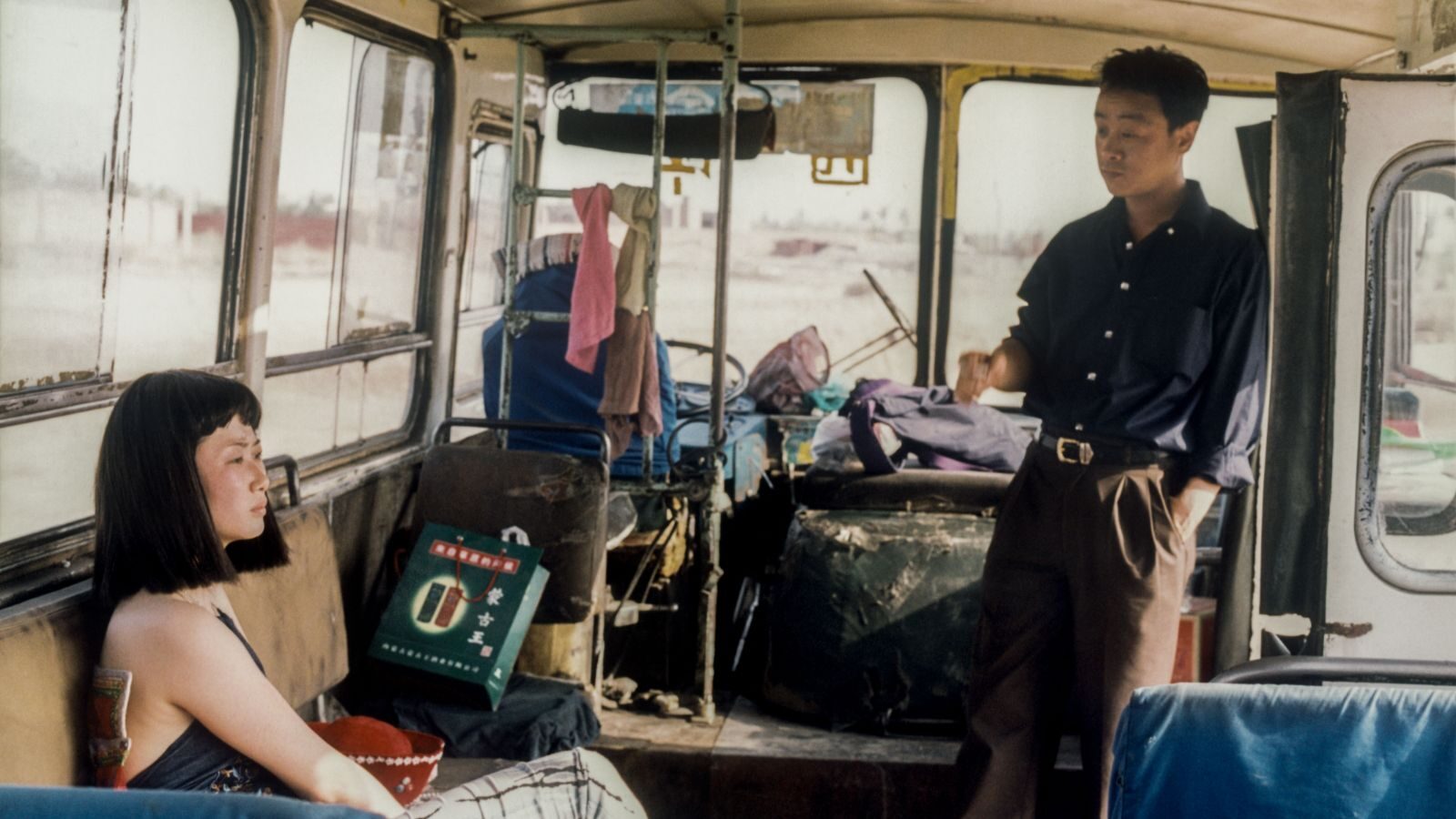
6. Caught by the Tides (Jia Zhang-ke, China)
Stitched together with digital remainders captured during his Unknown Pleasures and Still Life productions (and newly shot 2020s material), Caught by the Tides is Jia's COVID-period project, both in the subject of the film's third part and in its editing room form of production. In returning to these previous texts, Jia has created a survey of China's most consequential twenty-first century events, from the euphoria of the Beijing Olympics to the displacement of the Three Gorges Dam and the Wuhan virus. A melancholic platform for Zhao Tao's spectacular beauty, Caught by the Tides measures China's unseen advancement to global superpower.
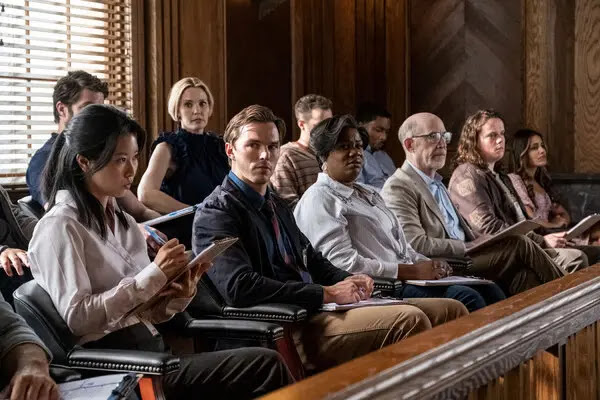
7. Juror #2 (Clint Eastwood, United States)
A welcome return to the nimble classicism of 1990s-era Eastwood, this supremely well-paced and involving courtroom drama revives Eastwood's decades-long interest in questions of justice, framing it within a system ruled by personal motivations and prejudices. Culpability, both legal and moral, is a central concern here as we motor toward a final silent showdown that expertly replaces dialogue with shot/reverse-shot strategies. Juror #2 contains many markers of prime Eastwood, from its extra-legal investigations to its spirit of professionalism that inhabits its many un-showy performances. Ultimately, Hollywood mercilessly ignored one of the best films it produced this year.
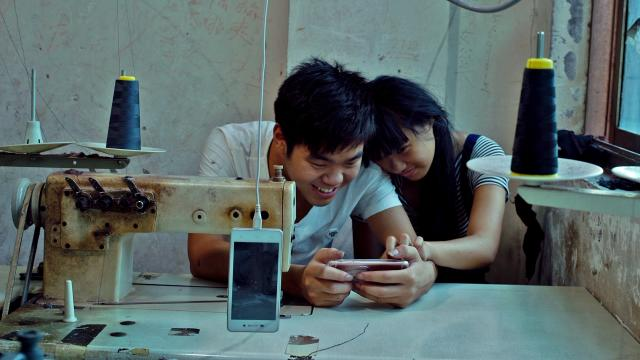
8. Youth (Homecoming) (Wang Bing, France / Luxembourg / Netherlands)
China's greatest living documentarian concludes his massive, nine-hour-plus "Youth trilogy" with this compulsively watchable and distinctive final installment. Over their new years' holidays, Wang travels with his subjects in packed railcars and over perilous, if scenic mountain roads, which lead to their economically disadvantaged small towns. After sharing a family meal, celebrating a wedding or simply passing the time, Wang's young factory workers will again return to the sweatshops, grim workers' housing and to the chaotic fraternization that dominated the first two films. The essential, observational 'Youth' films reveal the foundations of our global consumer life like no other films this year.

9. All We Imagine as Light (Payal Kapadia, France / India / Netherlands / Luxembourg / Italy)
For her richly nocturnal Night of Knowing Nothing follow-up, Kapadia provides an expansive portrait of what it is to live in Mumbai with its transplanted rural masses, and its flooding monsoonal rains. City and countryside, Hindu and Muslim, and arranged marriage and romance provide the structuring conflicts in this bifurcated story of two women as they travel south from the global megacity and cinema capital. This assured instance of international art cinema, with its tangible eroticism and its twenty-first century admixture of fiction and non-fiction, may be familiar, but it still stands as conspicuous counter-cinema to India's dominant commercial modes.

10. Trap (M. Night Shyamalan, United States / Canada)
Among the more overtly personal films of Shyamalan's critically marginalized career, Trap relies on director's daughter Saleka's very credible turn as a popstar, before the film's uber-Hitchcockian focalization shifts to her from Josh Harnett's suspected serial killer. Up to that point, the horror-thriller auteur has given us his own B-film take on Bresson's A Man Escape--not to mention a literal Parent Trap--with Harnett's scheming, paternal psycho plotting his slip from the tightening dragnet. Graced with thematically potent frontal close-ups and fluid overhead takes, Shyamalan's visual pyrotechnics invigorate this new-school collage of 21st-century tech, social media and fan culture. 

More 2024 Lists: Ten Best Older Films + Favorite Reappraisals and English-language Cinema

Ten+ Favorite Older Films (viewed for the first time in 2024; in chronological order):
Kohlhiesel's Daughters (Ernst Lubitsch, 1920) 
Johan (Mauritz Stiller, 1921) 
Girl Shy (Fred C. Newmeyer & Sam Taylor, 1924) + For Heaven's Sake (Taylor, 1926) 
As this first set of films should suggest, I made a concerted effort to see more silent cinema in 2024 (after realizing that I had mostly neglected this field of cinematic inquiry the year before). Among my biggest viewing highlights last year was Lubitsch's deliriously entertaining Kohlhiesel's Daughters, which I saw at the Berlinale with live orchestral accompaniment. I also remade my acquaintance with the early Swedish masters, Stiller and Victor Sjöström, and the great Harold Lloyd, who belongs forever in the company of the better remembered Chaplin and Keaton.
There's No Tomorrow (Max Ophüls, 1939) 
Mr. Shôsuke Ohara (Hiroshi Shimizu, 1949) + Dancing Girl (Shimizu, 1957) + Image of a Mother (Shimizu, 1959) 
For me, Shimizu is the fourth figure of the classical Japanese cinema, after Mizoguchi, Ozu, and Naruse. Having the opportunity to attend a long weekend of late Shimizu films at the Japan Society in New York, I was able to fill in some important gaps (of which I was not previously aware). The great Shimizu of the 1930s and early 40s was more or less present in these post Children of the Beehive films, but even where the idiom was a little less familiar, he invariably brought a depth of feeling and visual grace that reaffirmed the director as one of his industry's best, through the end of the 1950s.
Bona (Lino Brocka, 1980) 
Brocka showed a true mastery of constricted, interior spaces and crowds, while Hondo's master-shots introduce leaps in time and conceptual space that very much belong to the same art-historical moment as Greek master Theo Angelopoulos. 
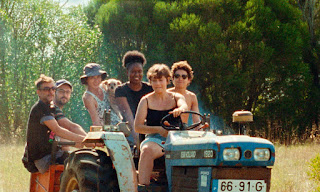
Toute une nuit (Chantal Akerman, 1982; pictured)
A work of extraordinary purity, and easily one of the best films I saw in 2024, period, this rediscovered masterpiece helped to bring to a close Akerman's greatest period, when she rated with Tarkovsky, Fassbinder, and few others as one of her moment's top filmmakers.
Maine-Ocean Express (Jacques Rozier, 1986)
Very of its mid 80s moment, and perhaps the most pleasurable of Rozier's highly aleatory post-Adieu Philippine efforts.
Moving (Shinji Sômai, 1993)

Best Reappraisals
(where my opinion moved furthest in a positive direction; in chronological order):
That Night's Wife (Yasujiro Ozu, 1930)
A film where the actors' hands are consistently the source of narrative content. One of Ozu's greatest silent films.
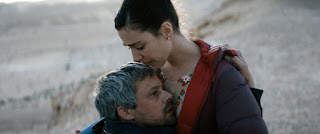
The Devil, Probably (Robert Bresson, 1977; pictured)
I was, rather ironically, as a young Christian viewer, too young when I first saw this on videotape a quarter century ago. No one else made movies exactly like this, and seeing it a quarterly century later, any confusion I once had evaporated in the sight of the the magnificent control that Bresson asserted over his mise en scène.
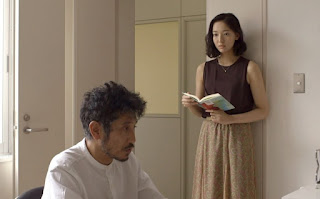
Music (Angela Schanelec, 2023)
The same quality of singularity as Bresson, seeing it on the big screen--rather than on a screener--made a huge difference for this gem-like, and more crystalline than I remember, art film. Sometimes it takes me twice with Schanelec.

Ten Favorite (Predominately) English Language Films (in order of preference):
The Shrouds (David Cronenberg)
Juror #2 (Clint Eastwood)
Trap (M. Night Shyamalan)
Anora (Sean Baker)
Despite liking his previous work and especially The Florida Project, I didn't expect to be as captivated as I was by Baker's profane, propulsive and populist Cinderella, led by the undeniable Mikey Madison and her very creditable supporting cast. I guess it really does belong to 2024.
Hard Truths (Mike Leigh)
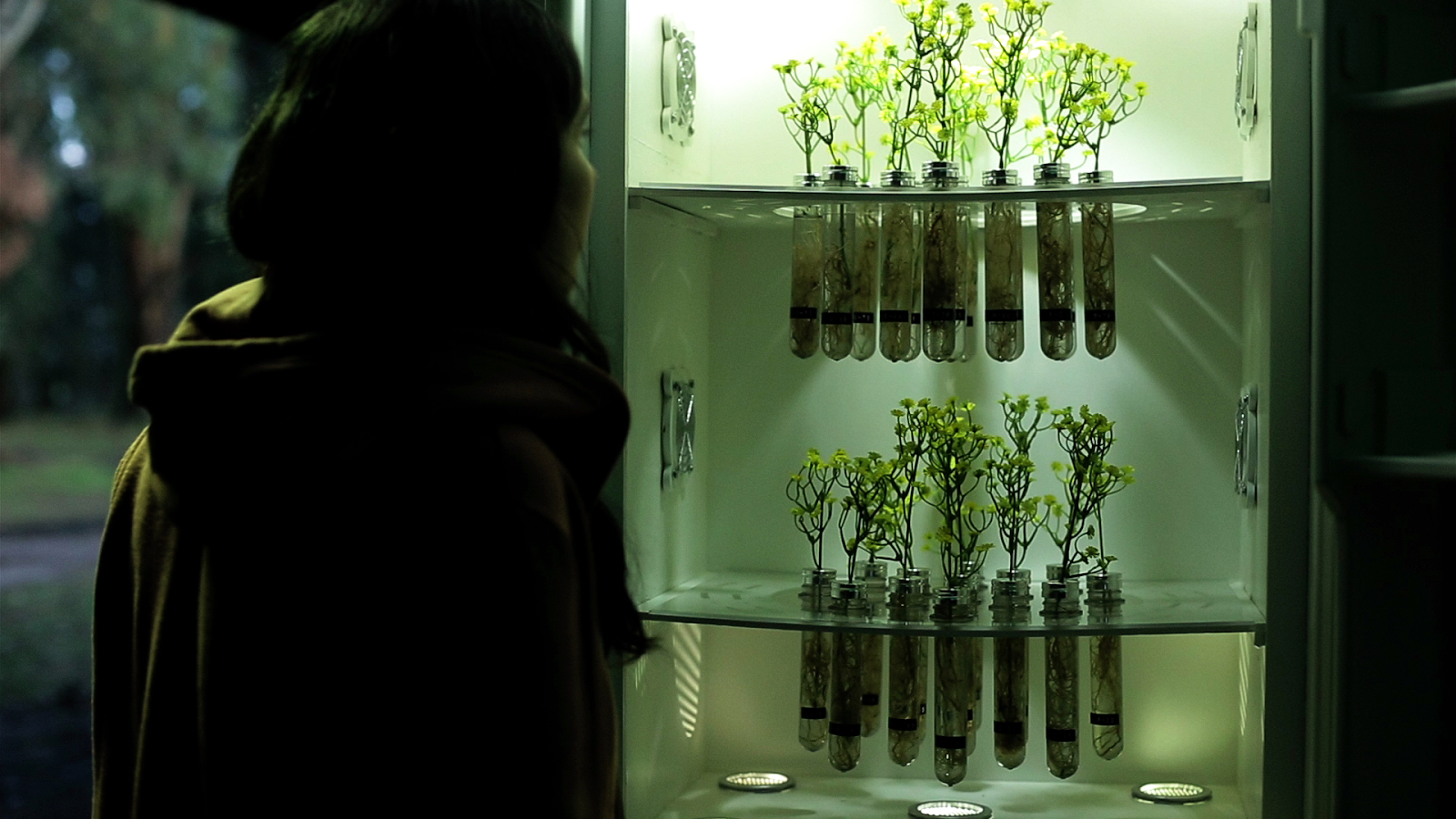
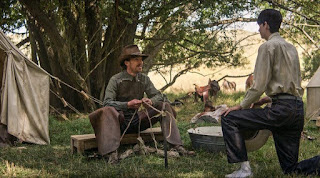
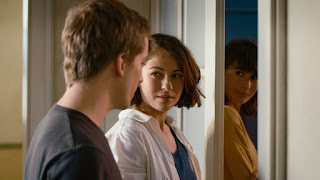
Friendship (Andrew DeYoung; pictured)
About the very poignant homosocial anxiety of losing a friend (who is much too cool to be your friend) as a result of one small, easily avoidable mistake. The optimal Tim Robinson vehicle.
Eephus (Carson Lund)
Harvest (Rachel Athina Tsangari)
A threshold story of the shift from subsistence to the land as profit-generating, Tsangari's work equally suggests Peter Watkins and zoom-lensed 1960s and 70s English cinema.
Rap World (Conner O'Malley & Danny Scharar)
Between the Temples (Nathan Silver)

For my "Ten Best Films of 2024," click here. For my best films for each year since 1930, click here, and for the silent era, here. Note that all of these lists are updated as I feel it necessary, and are subject to revision. While many of the above older films cracked their respective top tens, in some stronger years I couldn't find space--a testament to how much great cinema has been created (and how much remains for discovery and rediscovery).

Friday, December 29, 2023

Ten Best Films of 2023

1. Afire (Christian Petzold, Germany) 
It seemed inevitable that one of our greatest living filmmakers, Berlin School master Petzold, would eventually top one of this site’s yearly lists. Two films into his Rohmerian cycle on the elements, the director's La Collectionneuse makes consequential use of fire, wind and water all within a brilliantly controlled narrative that is so infected by its central figure's self absorption that we frequently have our viewing hopes dashed. A writer, director and actors' film equally, Afire adds some of Petzold's most lyrical and surreal images, the year's most vibey needle drop and a final act narrational recalibration that is worthy of the filmmaker's 2014 masterpiece Phoenix.

2. About Dry Grasses (Nuri Bilge Ceylan, Turkey / France / Germany / Sweden) 
Ceylan’s latest masterclass in human motivation possesses the thematic density and character complexities of the Russian novelists for whom the director has cited his admiration—with a marathon running time to match. Structured around a series of nuanced conversations, Ceylan’s rural Anatolian epic teases out accusations of impropriety against two male middle school teachers, before their romantic rivalry, focusing on a new teacher, takes center stage. Ceylan, in this work of genuine moral seriousness, refines his now signature high-definition video aesthetic and post-Kiarostami observational style, replete with its own unexpected moment of non-fictional address.

3. Asteroid City (Wes Anderson, United States / Germany) 
In this conceptual sequel to and massive improvement on The French Dispatch, Anderson finds encyclopedic inspiration in the American cinema and popular culture of the 1950s, stacking medium-specific metaphors (trains, dreams, open-air theater) on top of pulp genres (westerns, musicals, science fiction). Done in the service of a highly entertaining dioramic narrative that gestures at a bygone nuclear age, this archly American object rivals 2012's great Moonrise Kingdom in its thematic rigor. Yet, Anderson's very personal Asteroid City also admits uncertainty too as it looks to move beyond autobiography to something more cosmic.

4. Fallen Leaves (Aki Kaurismäki, Finland / Germany) 
This refreshingly crisp and compressed romantic comedy makes masterful use of the director’s renowned expressionless performance style that fuses very funny Finnish cultural clichés of emotional impassivity with the uber-serious cinema of Robert Bresson. The latter’s L’Argent is one of a number of references that Kaurismäki underlines—others include Chaplin, Ozu, Fassbinder, Clair and 1930s proletarian Hollywood—in what proves a celebration of the director’s sources, such cinematic fellow travelers as Jim Jarmusch, and even the director's own past output (Drifting Clouds). Blissfully entertaining and one of the director's very best.

5. The Zone of Interest (Jonathan Glazer, United States / United Kingdom / Poland) 
Glazer’s harrowing and very Kubrickian The Zone of Interest recreates the mostly bucolic home life of Auschwitz’s commandant Rudolf Höss and his family as they pass their days and evenings, literally, on the other side of the infamous prison camp’s wall. The product of meticulous historical research, Glazer uses the contrapuntal language of cinema to tell us what is going on in Auschwitz (through its more and less faint soundscapes) without visualizing the Nazi’s atrocities. Alongside 2015's Son of Saul, The Zone of Interest is one of the 21st century's most novel and impactful Holocaust narratives. A film that seems custom built for future intro to cinema syllabi.

6. Close Your Eyes (Victor Erice, Spain / Argentina) 
For his first fiction feature in four decades and his first feature-length film of any variety in three, Spain's great maestro Erice has created a very personal and moving apologia for his lost filmmaking decades. After a historical preface that references the classical Hollywood cinema that Erice began his career revising with The Spirit of the Beehive—here the reference is Sternberg with a blissful Rio Bravo diversion still to come—a more televisual aesthetic obtains for much of the loose, episodic film's near three-hour runtime, before projected cinema is brought to bear to explain the present in the film's Shirin-inspired conclusion. 

7. In Our Day (Hong Sang-soo, South Korea)
Korean art-house giant Hong's thirtieth feature since 1996 once again finds the director in The Novelist Film's autobiographical territory, in this case exploring the often comic daily interactions of the director's surrogate (in the figure of the poet Hong) and that of his lover and late-period axiom, Kim Min-hee. As the director contends on and off-screen with admiring acolytes and diminished health in his half of this two-parter, In Our Day extends the philosophical bent of Hong's most recent work, suggesting an answer to the biggest of questions in our ability to appreciate what is in front of us, to be thankful for existence without searching for deeper meaning.

8. Here (Bas Devos, Belgium) 
Following his luminous, nocturnal 2019 arthouse discovery Ghost Tropic, Devos once again traverses an often depopulated Brussels, in this case bringing together a Belgian-Chinese doctoral candidate and a Romanian laborer, just before the latter is preparing to return home. Devos's film is almost uniquely attuned to the acts of seeing (in microscopic detail) and listening, with the film's mise-en-scene lingering on sparkling nightscapes and to a series of magical incursions of the natural world into Brussels's industrial metropolis. A genuinely moving sense of romantic possibility decorates the film's gentle coupling in this exquisite Berlinale highlight.

9. Eureka (Lisandro Alonso, Argentina / France / Portugal) 
Though it failed to secure a competition slot at this year's Cannes Film Festival, Alonso's long-waited return may be that festival's most meaningful exploration of American Indigenous trauma. Eureka is structured in three parts that successively move backward in time and mediate Native experience respectively through a black-and-white western, an elegantly lensed if emotionally gutting Cops-style night in the life of a Pine Ridge police officer, and in an Amazonian mining camp where narrated dreams bring about tragedy. Civilization is a blight in this object of enhanced realism from the celebrated Argentine author of La Libertad and Los Muertos.

10. Music (Angela Schanelec, Germany / France / Greece / Serbia)
A film that is almost pathological in its exclusion of expository dialogue, Schanelec generates affect through crystalline images and a bracing use of baroque music in her I Was at Home, But... follow up. If that film represented her festival breakout, Music reaffirms Schanelec's singular position in the contemporary global cinema as an auteur of complete singularity of vision and approach unlike anyone save her most obvious ancestor, Robert Bresson. Subject to criticisms that it is pretentious and opaque, Schanelec has created something that works differently, and when the viewer allows it to, works with a greater intensity than far more familiar art cinema.

Sunday, December 18, 2022

Ten Best Films of 2022

1. Pacifiction (Albert Serra, France / Spain / Portugal)
In this magisterial portrait of France's diminished place in the 21st-century world, Spaniard Serra deftly introduces the intoxicating, hazy metaphor of politics as a nightclub within a false Polynesian paradise. This is the post-twilight of the colonial order with Benoît Magimel's white-suited high commissioner, embodiment of an exhausted libertine archetype and perfectly juxtaposed against the film's gender-fluid non-professionals, tilting at a power structure beyond his influence. Pacifiction is next level in both its ambition and achievement. 

2. The Novelist's Film (Hong Sang-soo, South Korea)
The first of two equally extraordinary new films on this list by the world's most prolific master, The Novelist's Film explores art cinema production from writer to programmer throughout its La Ronde-style structure. However, it is in its closing, first-person declaration of love for star Kim Min-hee that Hong's Berlin prize-winner truly takes its privileged place in one of the cinema's great bodies of work.

3. Walk Up (Hong Sang-soo, South Korea)
Expansive and retrospective in its view of Hong's alternately comedic and dramatic art, Walk Up is most surprising for its destabilizing narrative gaps that present the latest, novel means for introducing his signature repetitions. New loves come, go and contend with estranged daughter Jeong-su in this story of generational turn and the difficulties of making films (which is belied by Hong's real-world productivity).

4. De humani corporis fabrica (Lucien Castaing-Taylor and Véréna Paravel, France / Switzerland)
In the hands of Leviathan's filmmaking duo, the stuff of surgery television is transformed into mystifying documentary cinema—when it isn't palpably visceral in its effect. As the camera dives deep below the skin's surface, this singular work of experimental non-fiction offers up visually arresting images of undefined anatomy, reframing the human body as a site of unknown mysteries (in our illness-obsessed age).

5. No Bears (Jafar Panahi, Iran)
COVID-age video conferencing technology provides a new means for Panahi to circumvent his 2010 travel and filmmaking prohibitions, temptations that the Iranian auteur pairs with the film's metaphorical and literal boundary crossings. That No Bears also returns to the socio-political orientation of his pre-ban corpus, within the more reflexive framework of his 2010s features, makes this his ultimate provocation.

6. Apollo 10 1⁄2: A Space Age Childhood (Richard Linklater, United States)
Linklater structures his deeply personal rotoscoped narrative—the finest of his career—around a child's counter-factual moon landing ahead of the Apollo 11 mission. Time, memory, dreams, dead time, and just hanging out, often in front of a television, combine in this signature work by the director, a film that's at its most exhilarating during its endless passages of consumer culture-obsessed digression.

7. Coma (Bertrand Bonello, France)
Mining a personal canon that draws heavily on Lynch, Superstar: The Karen Carpenter Story and Linklater's aforementioned rotoscoping, Coma unfolds in a series of dreams and nightmares that center around a COVID-confined teen and a YouTube-style celebrity. This film for our time uniquely understands the disproportionate toll that lockdown policies have had on the young, while it awaits their future stories.

8. Unrest (Cyril Schäublin, Switzerland)
Time and space in Unrest are subject to constant measurement, whether it is the work of a Russian cartographer, the persistent photographing of a Swiss factory town or the four different clocks that regulate time as the modern world approaches. Schäublin's feature was one of 2022's great discoveries thanks to its extraordinary thematic rigor and a precise artistry worthy of its anarchist watchmaker heroes. 

9. Trenque Lauquen (Laura Citarella, Argentina / Germany)
The latest long-form opus from Argentina’s El Pampero Cine, the production company behind La FlorTrenque Lauquen displays a similarly Borgesian approach to narrative: stories embed within stories and mysteries compound as the film searches for a botanist Laura, played by co-writer Laura Paredes, who may not want to be found. Director Laura Citarella has made a captivating, no-less protean, and ultimately very worthy successor to the 2018 masterpiece.

10. EO (Jerzy Skolimowski, Poland / Italy / United Kingdom)
Skolimowski's panoramic road movie, structured around the travels of the eponymous donkey, explores a very different landscape from its Au hasard Balthazar inspiration—save for man's evergreen inhumanity—with its new Europe of migrant movements and disappearing hard labor. EO signals a long-eclipsed baroque art cinema that is refreshed by drone passages that announce its new form of pure cinema.

Tuesday, December 28, 2021

Ten Best Films of 2021

1. What Do We See When We Look at the Sky? (Alexandre Koberidze, Germany / Georgia) 
Combining the ordinary and every day with the utterly fantastic, Georgian director Koberidze introduces a productive dissonance that finds the fairytale, through omniscient narration, embedded deep in the real (of a very specific time—in the midst of World Cup madness—and place). Free, playful, and apologetically escapist from a moment we’d all like to flee. 

2. In Front of Your Face (Hong Sang-soo, South Korea) 
For feature twenty-six, Hong uses one of his simplest structures of replication—days one and two—to tell the story of a former actress whose return to Korea follows devastating health news (and coincides with a potential job offer). The resplendent Lee Hye-young overwhelms in this oversaturated exploration of grace—and variation on film twenty-five, Introduction. 

3. Drive My Car (Ryûsuke Hamaguchi, Japan) 
Drive My Car is the film where it all seems to come together for Hamaguchi. Adapting a Murakami short story of the same name, the director’s three-hour opus pulls equally from Chekhov, the subject of the play-within-the-film (which foregrounds the filmmaker’s unique method of rehearsing actors). Exquisitely crafted, emotionally resonant, and big in its impact. 

4. The Power of the Dog (Jane Campion, United Kingdom / Canada / Australia / New Zealand / United States) 
One of the greatest figures of the 1990s art house returns to Netflix—in a sign of the times—for her first feature in more than a decade. Displaying a Fordian compositional grace and late-classical storytelling, Campion’s queer take on hetero male values in the Old West transforms Kodi Smit-McPhee’s extraordinarily slim physique and slight manner into a site for spectacle. 

5. Wheel of Fortune and Fantasy (Ryûsuke Hamaguchi, Japan) 
Confirmation that it is the year of Hamaguchi—he also wrote the screenplay for Kiyoshi Kurosawa’s astonishing, 2021 commercial release Wife of a Spy—this three-part anthology makes expert use of the Japanese director’s great facility for the erotic and a set of surprising narrative turns. Time passes whether it’s marked by a belated reunion, the reading of an explicit passage or a long conversation. 

6. Il Buco (Michelangelo Frammartino, Italy / France / Germany)
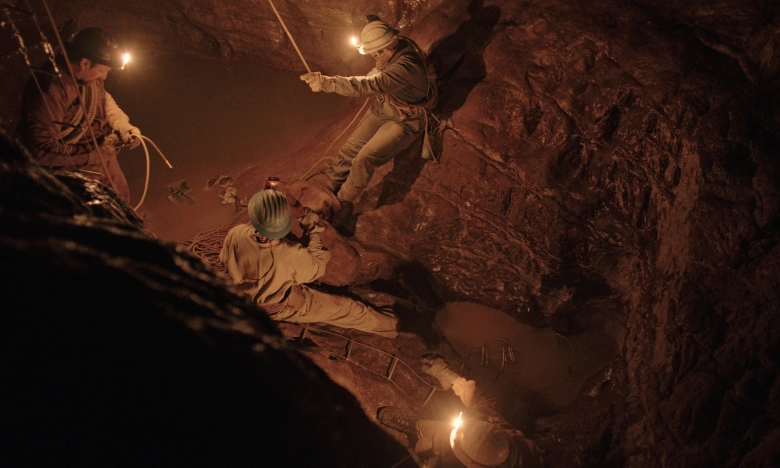
The Le Quattro Volte's director's first feature in more than a decade, Il Buco plunges hundreds of meters below the earth's surface, recreating the 1961 discovery of Southern Italy's deepest cave. Frammartino moves along specular verticals, up the side of skyscraper and with a shepherd into the Calabrian highlands and into breathtaking cavernous depths in this poetic exploration of emergent modernity.

7. Memoria (Apichatpong Weerasethakul, Colombia / Thailand / France / Germany / Mexico / Qatar / United Kingdom / China / Switzerland) 
Making extraordinary use of his surveillance camera and a piercingly metallic soundtrack, Memoria follows one of the world’s great directors to Colombia for his latest audio-visual immersion. With his shift away from Thailand, Apichatpong’s art becomes more conventionally surreal, creating a landscape that more fully belongs to dream and the cinema than to Thai history or myth. 

8. The Girl and the Spider (Ramon Zürcher and Silvan Zürcher, Switzerland) 
No one quite tells a “story” like the Zürcher brothers. Penetrating glances do the heavy lifting in a series of shifting interactions that are latently erotic, violent or both. More comic than dramatic in tone, the action unfolds mostly indoors—just as it did in Ramon’s The Strange Little Cat—as one of the principal’s packs up and moves with the help of family, friends, and a compelling ex. 

9. Ahed’s Knee (Nadav Lapid, France / Israel / Germany) 
A goodbye to mothers—to Lapid’s own late collaborator mother and to his Israeli motherland—Ahed’s Knee plays with his surrogate’s ambiguous motivations and the palpable romantic chemistry he shares with outstanding newcomer Nur Fibak, up to the point where it’s time for his goodbye. An explosive denunciation of Israel ensues in this scalding Synonyms follow-up. 

10. The Tsugua Diaries (Maureen Fazendeiro and Miguel Gomes, Portugal / France) 
Moving from end to beginning in a spiritual sequel to Gomes’s breakthrough Our Beloved Month of August (2008)—“tsugua” is “august” in reverse, naturally—the co-director and his filmmaking partner Fazendeiro introduce a structure that emphasizes the collaborative labor underlying their production. COVID also emerges as a context in this experimental fiction-documentary hybrid.

Thursday, December 31, 2020

Ten Best Films of 2020

1. Days (Tsai Ming-liang, Taiwan) 
Days is one of the more Warholian of the director's feature-length works with Tsai emptying his film of faces and especially bodies (and backpain) of all but the most minimal of narratives—unfolding over exceptional durations and deeply repetitive gestures. It is also a film of profound loneliness and the desire for human touch, premiering just before the world shut down.

The Calming (Song Fang, China) 
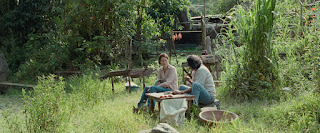
There is something quite special about Song Fang’s quiet critical breakthrough, where a surrogate for the female writer-director models our own viewing experience as she passes alone looking at and listening to a succession of richly detailed poetic landscapes. The Calming is the most Japanese of contemporary Chinese films.

3. Wife of a Spy (Kiyoshi Kurosawa, Japan)
One of the most constant investigators of Japanese identity, Kurosawa's first attempt at period drama provides a confrontative portrait of its former war atrocities. Progressing through a series of sharp, character-powered reversals, Kurosawa's mastery is present in full force—as is his deep knowledge of film history (as we see in a pitch perfect film-within-the-film that doubles as plot commentary). 

4. The Woman Who Ran (Hong Sang-soo, South Korea)
The Woman Who Ran ingeniously finds yet another way of retelling the same story in the space of a single feature—in this case relying on Hong axiom and muse Kim Min-hee to tell friends and acquaintances what’s been going on in her life (when she’s not re-watching the same movie twice in a brilliant self-reflexive aside).

5. Undine (Christian Petzold, Germany / France)
This bewitching Berlin highlight by the mid-career Petzold is a film of layers and of depths—literally of the historical strata of the Berlin cityscape that mythic heroine Paula Beer brings to life and the murky deep that her human lover Franz Rogowski dives. A film of exquisite mystery from one of giants of contemporary storytelling.

6. The Salt of Tears (Philippe Garrel, France / Switzerland) 
At this point an old master who has been experiencing a long, late-career renaissance (since at least 2013's extraordinary Jealousy), the post-New Wave Garrel returns with one of his most purely entertaining tales of romantic coupling and parting—complete with a liberated heroine who turns the table on the film’s noncommittal male.

7. Lovers Rock (Steve McQueen, United Kingdom) 
The consensus peak of British director Steve McQueen’s powerful five-film historical portrait of London’s West Indian community (Small Axe), Lovers Rock rhythmically unfolds over the course of an underground blues party, culminating in an epic singalong to 1979 hit “Silly Games.” A group of films defined by McQueen's long narrative pauses.

8. City Hall (Frederick Wiseman, United States) 
Boston Mayor Marty Walsh emerges as a Wiseman rarity in this surprisingly brisk, nearly-five-hour documentary portrait of big-city governance: a compelling human subject who anchors an archetypal American institution. We are living in the midst of one of Wiseman's greatest periods—as he blows past his ninetieth birthday.

9. The Works and Days (of Tayoko Shiojiri in the Shiotani Basin) (C.W. Winter & Anders Edström, United States / Sweden / Japan / United Kingdom)
Across its monumental, work-day runtime, Winter and Edström blend the real-world (Tayoko, her family, friends and the Kyoto countryside) and the artificial (professional actors and other phantoms) in the service of a vividly present—and remembered—quotidian reality. A film that respires with the immense beauty of the ordinary.

10. Malmkrog (Cristi Puiu, Romania / Serbia / Switzerland / Sweden / Bosnia and Herzegovina / North Macedonia) 
Occluded framings through open doorways—in the manner of Aurora—and a philosophical torrent of words (Sieranevada) made for one of the year’s most singular viewing experiences. Introducing a resurrection of sorts into its conversational structure, Puiu's dense text is literally one to read and re-read for all but the film's native speakers.